





close

Diaspora Matters

Diaspora Matters

Interesting Crowdfarming Initiative launched

crew 3

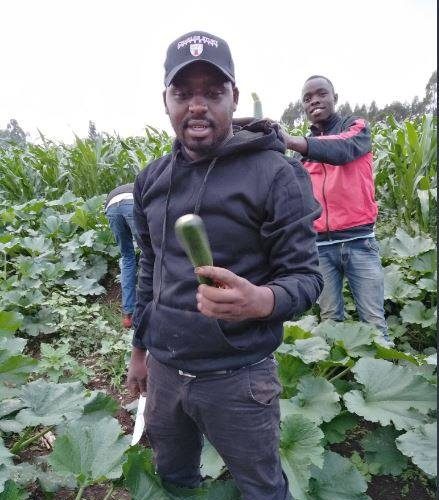
Africans just love farming! Give them land and support and they will do wonders- after all farming is the oldest entrepreneurship sector on the continent. Of course there are challenges in terms of access to latest technology and others such as access to capital, markets and other resources. So from our 50,000 strong online community, we advertised for those interested in crowdfunding and the response was overwhelming!

Crowdfarming is the future of farming on the continent as it involves members interested in pooling resources together to enjoy economies of scale and other benefits. One of our forum admins offered the use of his farm to the ZBIN community and technically the forum members now own a piece of land.

Last Suturday witnessed a small group of our members touring the farm located in Beatrice about 37 kilometres from Harare and what an eye opener!

Our proposal for the initiative is the formation of a company wholly owned by interested members and the next proposal is brainstorming on a horticulture business idea which will be conducted by an independent business consultant.

Once this is done we will review the business plan and then contribute funds for the project. Shared resources means we reduce the risk of failure and the pooling of resources means that capital will nolonger be a hurdle in farming! So this is the biggest buzz on our forums and we believe only the sky is the limit.

We are not recruiting too many new members for logistical purposes. We will come and invite more once the project becomes a success and then we will scale it up across the country.

Talk of the power of unity!

Loading

read more
Diaspora Matters

Foreign Truck Drivers in SA in trouble

kubvira

Its not looking good in South Africa for foreign truck drivers as they are facing daily harassment and attacks on the roads. Locals especially in KwaZulu Natal are pushing their leaders to take drastic actions of banning all foreign drivers and replacing them with locals.

Only a daily basis, truck drivers are being targeted with a number of deaths recorded and unrecorded by reported on a weekly basis. Matters are coming to a head next week on 2nd September 2019 when an industrial action has been called by locals giving all foreign drivers to stay off the road. This has a huge impact on the transportation of goods in South Africa and the region.

In response, foreign drivers have also come up with a counter move by participating on an industrial action starting on Friday this week and there is a high possibility of border or major high way blockades. If you are travelling this week and the next week one, take into consideration possible disruptions on the high ways.

Advocacy pleas from the foreign truck drivers.

SADC governments to conduct high level negotiations to safeguard the security of drivers and their cargo.

The Zambia High Commission in South Africa has already issued a warning to their citizens on the issue, more governments should do the same.

The issue has the potential to spark xenophobic violence and cause more harm to citizens and regional trade. There is need for high level intervention to this fast deteriorating situation or the opportunity cost will be high.

Loading

read more
Diaspora Matters

Of Lorraine Guyo, Startups and Contracts

thoq

Lorraine Guyo is one of the most influential ladies in Zimbabwe in 2019. A beautiful young lady who was propelled to stardom through Social Media. Her profile has been on the rise thanks to skits produced and directed by her former boyfriend Thomas Chizhange who is the founder of Zimbabwe’s Facebook Page of the year, Thomas Chizhanje and Friends.

Grey Contract

Thomas Chizhanje carried out a lot of work for Lorraine in sponsoring her startups and both parties agreed that he was going to recoup his costs once her career took off. Typical of most startups, trouble started when they received close to US$700.00 from the monetised Youtube channel and sponsors.

Then the couple split leading to controversies regarding the share of funds. Thom then took his money back without agreement and now Lorraine is crying foul. She wants her monies back in full and is claiming her ex boyfriend stole his money.

Sounds familiar?

This is a common story of startups, you have financial and other resources challenges at the first and enter into informal relationships or partnerships and trouble starts when your business starts to take off. All sorts of messy legal stuff start to crop up and some can be costly or leave your brand in tatters.

Who is putting funds into your project? Get a formal contract.

Who is volunteering? Get a formal contract for the contribution.

Someone partnering with you? Get a formal contract to protect yourself in future.

Falling in love with a business partner? Disaster in the making, when the relationship turns sour, you will have huge bills to pay.

Our forum legal contributor, Namatirai Ruzvidzo has posted a number of legal advice on the forum with some of them already on this site. Do look forward to more useful legal advice on the forum.

Loading

read more
Diaspora Matters

Youngster makes good monies from Beekeeping

beekeeper

Did you read our last book titled Business Opportunities for Zimbabweans? We covered plenty of opportunities including some researches and interviews. One of the opportunities we covered in the agriculture chapter was beekeeping. Look for the book and read on page 35. Below we feature one of the viral posts in our forums concerning beekeeping;

Yesterday l met a 24 year old guy at WINPAT in Harare opposite Gain Cash and Carry. He is from Buhera and graduated from Harare Polytechnic with a diploma in boiler making.

He was driving a fancy Lexus vehicle and he was buying turkey feed whilst I was buying de-worming tablets for my goats. In Harare he stays in Tynwald South where he built a house. Now here is a shocker…the youngster is only 24!

The transformation

It dawned upon the youngster that he had no relatives in the capital to offer him accommodation or financial support. He was on his own in the capital! Some of his peers were job hunting and some having turned to vending on the streets of Harare. Some had trekked to the diaspora.

What next?                                                                                     

The only last thing that came to his mind mashoko ababa vake ekuti simba rehove ririmumvura ( the power of a fish is in the water) meaning our roots kumusha, if we think fast ndokunobva financial freedom!

Tried to do fish farming but faced water challenges due to low rainfalls. Tried a hand on cattle rearing but there were no sufficient pastures. End of the road? Not really…

Then he attended a 1 day workshop on beekeeping costing US$5.00 and was empowered for life.

 So he headed to his rural home,  kwakucheka miti and mapuranga kwakugadzira mikoko 50 and kwakuuya kuHarare kwakutenga maold pallets kwakunogadzira mikoko.

He now has 300 beehives and all he did was to buy wax or namo yekuisa mumikoko  and as we speak he literally has thousands! Hold on- thousands? Yes he has bees working for him lol

Harvesting

Harvesting takes place every 2,5 months or 4 times per year.

Each beehive gives him 40 litres of honey but he can only harvest half and leaving the remainder.

Each beehive therefore gives him 80 litres of honey.

Wholesale price of honey ranges from US$2-US$5.00.

Do the maths

His revenue is a minimum of US$160 per beehive to a maximum of US$400 per year.

Now do the rest of the maths on how much revenue he gets per annum!

Future Plans

Does it now maketh business sense why he managed to build a home in the capital at such a tender age? At what age did you build your first home?

The business does not require much labour unlike other business ventures and the youngster has plans to go fully commercial and increase the number of beehives to 1000. Who says rural areas are outposts of poverty?

We end by quoting a leading entrepreneur from Kadoma, Mr Low who says;

Financial freedom haineyi nekuita degree it’s just basic education and common sense!

Loading

read more
Diaspora Matters

How to get your products sold in leading supermarkets

pp

So how do you move huge volumes of your products through leading retail shops? Dont you think this question should have been part of your high school topics? Getting an assignment to approach local shops and engaging them in pushing your products?

Worry not if you missed this at high school and college. Our forum recently tackled this important area and we had brilliant responses which we feature below;

Frank Mzondiwa What I know is you need to have

A registered company with tax clearance

Barcode your products

Quality packaging

And also your products should have a huge probability of being bought.

So it’s best to start with small supermarkets until you have a huge clientele so as to convince the buyer that your products will move than just to waste space on the shelves

Harry Nyakatonje Good rapport with the buyers, products should be of good quality,if u need licensing or registration do so,be tax compliant,have capacity to replicate the orders they want in as many branches….be able to be consistent….don’t push for cash,hear out their terms….some prefer that u leave a product then they pay u later to reduce risk on their side….to reduce risk on your side employ merchandisers and brand ambassadors,run promos so that the shop sells more and u have good turnover …. repeat until u no longer have to introduce yourself……don’t be greedy if let’s say u supply oranges ,u run out of stock,take your friend’s orange if they make the cut for consistency

Above all be good with people,it doesn’t matter u own a farm,a company ,the latest SUV ,neat suits…… Be humble ,wear the perfume of the buyer to fall in their favor….you don’t have to bribe but be accommodating , professional and friendly

On large chain store remember they are big ,head office centralises buying power so be ready for beaurcracy and redtape, patience is needed .You may be lucky to be given cash,they may ask for your last price ,don’t lower your price at once,flinch a little ,hold your ground,tell them to make an offer and top something on that offer knowing it’s in your comfort zone, effective negotiation skill.I know most things are going paperless but at least have a name ,a receipt book, invoice book etc

Know your numbers and product.. .do not be like a fly by night… people will undervalue you….know in figures how much u can produce and supply….if there is a possibility of venture capital or franchise….we all have seen OK Pot “o”gold products…. sometimes they want it to carry their name coming from your factory….if u sell strawberries know what strawberries do,how to best preserve etc…..carry samples …hapana anoda kunzi mastrawberry ekwa OK haana taste.

Mohamed Adam You need to be prepared to give credit unless its a product that they see does well for them, they then pay you on delivery. In today’s economic system, i would not advise one to start with trying to get their products in these shops, buy the time they pay you, your money would have halved in real money.

Loading

read more
Diaspora Matters

Who was auditing NSSA?

nssa

The initial inquiry on state capture in South Africa claimed the scalp of an unlikely suspect-KPMG! So as the nation reviews the damning audit reports by the Auditor General, one of the questions we should be asking is ‘Who audited NSSA? What role did they play in the plunder of public resources? We fully appreciate the critical role of auditors and the limitations on fraud detection and reporting. But how far are they liable in cases where rampant corruption would have been unearthed and yet their opinions could be at variance with what would be on the ground?

Looking at NSSA, the public may be interested in knowing the composition of the audit committees at the institution. What was their role? Who were the internal audit members? Were they getting salaries? How was the corporate governance culture at the institution?

Zeroing in on the finance department-who are or were the finance directors? What are their qualifications and experience? Which accounting and auditing bodies do they belong to? Did they follow their professional ethical standards? Are professional accounting and auditing bodies going to sanction their members implicated in various fraud cases perpetrated at various entities across the country?

Around this time last year, 3 local NGOs had their funding cut by a leading humanitarian organisation. One of the directors of the organisation publicly defended her organisation saying they had recently conducted an external audit where their books were determined to be clean or unqualified. Who were the auditors of these organisations? Critically, who were managing the finances?

Are audit clerks remunerated enough? How are auditing firms handling the undue pressure on their staff to be corrupt? Do they have reporting mechanisms for stakeholders to report and bring evidence of corruption?

The Institute of Chartered Accountants in Zimbabwe is responsible for the training of local auditors, they also register auditing firms. How far is the institute going in terms of professional development and protecting the integrity of the profession?

Are they aware of the challenges and limitations in the profession? How are they responding to some of their members implicated in corruption? Do they ever solicit for input from members of the public?

The same applies to all finance professional bodies such as the Institute of Internal Auditors, ACCA, CIMA and CIS. Are they following developments in the country? Are they aware that some of their members could be facilitating fraud? Are they taking disciplinary action?

The accounting profession is well known for integrity..it is responsible for the stewardship of resources for shareholders, the government and tax payers. To what extend should the public rely on their work? How genuine are audit reports from Zimbabwe?

We expect all finance professionals to self introspect and review ethical guidelines. We hope to see action from all auditing firms reviewing how they conduct business and protecting the image of the profession.

We look forward to seeing ICAZ being hauled before the parliamentary committee and answering various questions pertaining to their members and audit firms. If the auditors of NSSA issued clean audits despite the rot at the organisation, then they too are liable. They should be penalised and forced to return back all audit fees plus a hefty fine. Some may need to be deregistered in order to send a clear warning!

A discussion within our forum on the issue showed that the rot in the auditing profession has reached alarming levels. Auditors in the country are easy to bribe with some offered free air tickets or jobs for sweeping corruption under the carpet and issuing clean audit reports. One wonders what would have happened had the Auditor General Office not carried out second audits?

How many have mechanisms to review -audits? Just how reliable are audited statements from Zimbabwe? As the country fights corruption, we need all those found guilty caged plus restoration of integrity of the accounting and auditing profession.

This is a sensitive area but South Africa did it and all audit firms are now wary of the risks associated with unprofessional behaviour. We need to start talking loudly about the rot in the sector in order to restore confidence.

We go back to our initial question-who signed off the financial statements at NSSA? Which accounting or auditing professional bodies do they belong to? Who audited them? Is the audit  firm fit to remain operational? What steps is ICAZ going to take?

Food for thought.

Loading

read more
Diaspora Matters

How to open and run a bottlestore in Harare

liquor-store3

In this article, we share experiences of starting and running a business in Zimbabwe. It is not easy to rent commercial properties without hurdles. Here is an account from one of our members.

Iam a Warren Park boy, born and raised in Highfields and later on moved to Warren Park.

So one day at Mereki, met a youngster from the hood-Tinashe and we started reminiscing the good old days.

Our thoughts got deeper and we started asking why we were spending money at Mereki? Why not collect money instead? Who was collecting all the mula at Harares premier entertainment spot?

So in 2010, we identified a place in Mufakose and entered into a partnership. The place which had been closed had little value so rental for the bottlestore and butchery was pegged at US$600.

Our strategies
1) Mereki was popularised by the late chairman of Dembare(Nhekairo)..after every match, he took Dembare to Warren Park and soon fans trekked to the place. So as outsiders, our joint needed community ownership. We formed a boozers soccer club…bought soccer kits and after every match they would troop to our place with a crate available for free. This was the master stroke….overnight our joint became popular.
2) Spruced up the place…new paint, gazebo, braai stands etc! In the ghetto they appreciate good things…add a bit of class and u have more followers.
3) Experience Economy: At Mereki we have ladies who braai meat such as the popular Mai George but our model was not to copy and paste Mereki in totality…we had seen that at Highglen men enjoyed braaing own meat, drinking and discussing stories…basically whiling away time whilst networking. Its a pity Old Mutual banned the guy who had brought the concept…so we adopted a working model and boom….what a magic bullet! 
4) Hararians love good parking space…Mereki, Zindoga and Highglen…we were fortunate to have plenty of this at our place!
5) Providing music works against experience economy…many want the freedom to play own music. So we balanced this by only hiring a professional dj during weekends.

Results?
Revenue jumped from USD1,000 to USD25,000 per month in 6 months. So popular was the place that we literally became the entertainment place of choice in Mufakose. Sons and daughters who had moved North of Samora started trekking back….Ko kuGhetto ndokune yese ka? Ghetto fabulous….Mfombi crew never disappoint.

Our catchment or area of influence included Kambum, Warrenz, Budaz, Crowborough and others.

Place to chill with others whilst enjoying good stories…soccer, economy (we avoided politics)

Then…
We didnt have a formal lease agreement, the owner had refused. Then one day he came to the place and we saw him beaming with a smile.

Vafana zvirikuitaka? Tikati yes mdara….zvikanzi good makapenga vafana vangu. Tikati tinotenda mdara.

Zvikanzi eeeh but rent sevanhu vakuita mari svitsai pa thaza…

We signed and paid …a small dent on the balancesheet and income statement.

We continued on our upward trajectory then 3rd month takuda kunobhadara rent….up to USD 1800. Fourth month up to USD 2400.

You can do the maths of how much he was demanding by the 6th month🤷🏾‍♂

We eventually came to the decision to close down! We could not cope with the calculated plan to chase us from the place we had done so well to spruce up and make a preferred venue of entertainment…

Tinashe decided to fly solo and opened another place at Kambuzuma 2 Shopping centre. I continued to support him but insisted on a long term lease.

Our former clients followed but in the 4th month the owner of the place came and demanded to also sell her alcohol in the same pub!

Yes kuti iwe wotengesa rako doro…ini rangu? How bizarre…

Zvikanzi ukada kuramba ini ndiri politically connected!The message was loud and clear…move out of my place!

Distraught and heartbroken….Tinashe sold everything and closed down. He headed to Kadoma to try his hand with gold mining.

What became of the former places?
The new tenants were attracted by the huge numbers we had built. They didnt know how we had built them nor how we helped sustain them.

They didnt know our experience of seeing Mereki start and grow…they had no connection with the community. They didnt know the community was angry with their take overs…they totally shunned them.

As for me…I vowed never to rent a commercial stand from anyone!

Loading

read more
Diaspora Matters

The Vegetable Revolution in Zimbabwe

dmk

The tobacco selling season is almost coming to an end in the next few weeks and most tobacco farmers in Zimbabwe are swearing never to go back into tobacco production. Production is expected to drop even further next year as reported by the Tobacco Industry and Marketing Board (TIMB) that seed sales have dropped by 55% as compared to the same time last year 2018. These sentiments have largely been driven by the unstable economy and the ever-changing monetary policies which caused significant losses for most small scale and even large-scale farmers. Off -late horticultural production or rather fresh vegetable production is being spoken about and seems to be on the rise in Zimbabwe. This could be a lucrative alternative.

According to the Ministry of Lands Agriculture, Water, Climate and Rural resettlement, fresh vegetable production has grown sharply by 46% in the last 2 years to date. The area under vegetable production has also increased by a staggering 25%. Carrots production has increased by about 85% in 2019, followed closely by our all-time favourite funeral relish as my father used to call it, cabbage at 55%. These figures clearly show that there is a huge demand for fresh produce on the local market and international market and hence I strongly recommend that every farmer with the right capacity should think about growing fresh produce. According to the same report, pea production also increased significantly by 47%, just to shed more light, 98% of the peas produced in Zimbabwe are exported which translates to good profits. However, production for export requires a separate article due to the complexity of the accreditation required which we will talk about in detail in the next article.

You will be surprised at the demand that exists for fresh fruit and vegetables on the Zimbabwean market. You may be selling cabbages from your back yard small garden out of the boot of your car why not commercialise it. A lot of individuals are leasing out pieces of land in and around Harare why not take up the opportunity to expand your small enterprise before you know it, you will be supplying your produce to major retailers in Zimbabwe. There is an English adage which states that the earliest bird catches the worm, this is the right time to invest in vegetable production. Perhaps a few tips to help you plan

  1. Have a market – Do not grow anything commercially with no market this may result in huge loses. Talk to your market (e, g supermarkets) ask what you can grow for them, If you can secure a contract the better.
  2. Grow your crop out of season, this usually is possible if you have a controlled environment such as a green house. You will get good prices as you are able to sell when product is limited on the market.
  3. Have adequate skill, yes, we all have at some point been able to manage a small vegetable garden at home successfully, however in commercial production a significant amount of skill and training is required. Employ someone who is or get the training yourself.
  4. Reliability, like any business reputation is everything, one unhappy customer has the power to destroy your significantly damage your business. Supply the agreed quality and amounts at the promised time. Over the years I have seen a lot of good farmers loose lucrative contracts due to greediness and unreliability.

Come and Join us on the 3rd of August 2019 for our ZBIN meet and greet party in Chitungwiza, Harare Zimbabwe as we discuss and share ideas on more business topics. 

  • Emmanuel is a qualified Agronomist with more than a decade’s experience working in the agricultural industry and development sector. You can contact him on edndsep@gmail.com

Article by

Emmanuel D.N Dube

ZIBN Agronomy correspondent

Loading

read more
Diaspora Matters

Business and the use of Juju in Africa part 1

maiazuka

When it comes to business books and other resources, the formula is clear cut-everything is scientific! Measurable, can be calculated, reviewed and analysed. The formula for calculating profit is the same-the formula for digital marketing success is straight forward. Now how about the use of the underworld in business? Is business spiritual?

Unfortunately you are never going to see this covered in business books, you will not find academic research papers on this area and yet it plays a huge role in the business sector across the continent.

Our forum recently tackled a case of a Zimbabwean who got juju from Mozambique to boost his business. Everything went according to plan as he got instant riches enabling him to buy 2 kombi taxis and 1 private vehicle. His repair business in town experienced rapid growth fuelled by juju.

Things started going southwards when he failed to abide by the juju conditions which required him never to sleep between 6:00pm and 6:00am. He accidentally slept and one child died. Did this several times and 2 more children followed!

Realising his blunder, he returned to Mozambique to seek help from the sangoma who had initially helped him but he found him gone with no traceable references. The businessman then sought help from several prophets but to no avail.

The trends

Juju use is widespread in the business sector.

Juju use results in instant or miracle success or wealth.

Wealth created by juju is short lived.

The cost of juju includes loss of lives and more stress for the concerned business person and immediate family.

Once one has taken juju then they have crossed the Rubicon, one cannot return it to the source.

What science fails to prove

The businessman all of a sudden had a lot of clients as his business enjoyed rapid growth. What was attracting the new clients? What impact did this have on other businesses? How many closed as most clients headed to this juju inspired business?

Most popular mhikos (covenants)

Sleep related

Not sleeping during the night

Not sleeping the day you woke up

Business premises related

Not entering business premises (owner remains in car)

Certain offices or rooms that can only be entered by the owner

Children related

Children who do not marry

Children who are barren

Children who give birth to particular sexes

Children who die in mysterious circumstances

Deaths at a particular period during the year

Others

Not visiting hospitals

Not attending funerals

Not giving visitors food

Relieving in the bush

Not helping close relatives

Being unkempt

Sleeping with many partners

Please note anyone showing any of the above signs does not necessarily mean they have mhiko to abide by as this information is general. What is unmistakable though is there is a visible pattern which can be plotted on a graph.

The practitioner must religiously follow the mhiko or face dire repercussions. Please also note that there are some innocent people who can give monies which become fixed and they can encounter a sudden fall in wealth leading to some to speculate that they have been using juju.

The late Sekuru Ndunge from Chipinge is said to have a mysterious chicken which was used for juju purposes. Visitors to his place interested in juju had the chicken brought and picking maize seeds. The number of seeds picked equated to the number of years one lived a wealthy and luxurious life style. At the end of the period-one faced sudden death mostly through road accidents. The story of Bothy is well known by Mutareans.

Surviving juju inspired competition in business

The cost of using muti in business is steep high and those not practicing it risk early business closures. There is no empirical evidence to support this but discussions in our forums shows some who encountered this really struggled.

To survive, follow sound business principles and practices. It always work in the long run in developing a sustainable business model. Do not panic when others come and inexplicably dominate the industry-in most cases its just a flash in the pan.

Concentrate more on developing close relationships with your clients. Deliver top quality services on a CONSTANT BASIS. Clients may temporarily switch to juju inspired competitors but when the dust settles, they will trace their way back!

You are not going to find this in business teaching or books and yet its reality. Its practically impossible to carry out a research survey to find the prevalence of juju use but by listening to reality shows or evangelical shows on television-one gets an insight into the dark world of juju and business.

Give us your own insight into this practice.

Muito Obrigado

Loading

read more
1 27 28 29 30 31 92
Page 29 of 92