
We only have 3 forum objectives and they are (1) Access to investment and business information (2) Access to Markets and (3) Access to Capital for our members. Three simple objectives for all of our members who are mostly based in Southern Africa and beyond.
We have done well in Objective 1 –Access to investment and business information. We have been giving you information on business trends, new investment ideas and general business information for the past 2 years. Our Facebook page has a lot of useful business discussions, our Whatsapp groups have active business discussions from our members. In terms of information provision, we believe that we have done fairly well. There is room for improvement in terms of quality and we hope to recruit interns who will assist with market researches so that our members can make informed investment decisions using information that is evidence based. We also hope to improve in terms of coverage because we have concentrated on Harare only and not covered the rest of Zimbabwe and the region.
Objective 2–Access to Markets. This is an area of weakness because we have not done enough to enable our members to sell their goods and services. The good thing is that we are aware of this area of weakness and are taking corrective measures with a number of initiatives lined up for the rest of the year.
I did spend the greater part of Saturday last week talking to some of our members during a meeting that we held in Harare. We brainstormed on the Poultry Market Challenges, as you may be aware-access to markets for our poultry members is a big challenge which is hampering the growth of the sector by our members. We came up with various business models that should help solve the challenge. One of the model is the formation of a company that buys poultry from members and sell in bulk to retailers. So one company that specialises in market identification and selling chickens. Farmers would concentrate on what they do best and that is producing chickens and not have to worry about the marketing side.
We also have an Online Car Boot Sale which is looking at the creation of one regional market for goods and services in Southern Africa. This should help members in selling goods and services beyond the borders. We are initially targetting Malawi, Zambia, Namibia, Botswana and Zambia because these are the countries that follow ZBIN closely. We are going to invest a lot of resources inorder to tap into the opportunities that abound in the region.
Objective No 3: Access to Capital: Perhaps the bigggest hurdle in the ZBIN community-Money an other resources inorder to start businesses. Where is the Money ZBIN? We have not done much in terms of enabling our members to access capital. On objective 1-Access to Information, we have covered business plans, crowdfunding and listed ZBIN members looking for investment partners. This is not enough because we have few success stories of members who managed to access funding through the forum.
We are aware of this greatest weakness to date and the good thing is that we have a number of initiatives and innovations that are coming up. The first one is the development of an investors database where our members will list their business plans. A typical business plan should contain the name of the organisation, history,capital structure,detail of goods and services,name of industry and level of competition, competitive edge, current and proposed financial information and the proposed investment that require funding. You can refer to our post on business plans for reference. So we hope to ensure that all members requiring capital have this information in our database. This should help potential investors to invest if they are interested. Last week, we did share a list of members looking for investors-this is not enough as it barely covered the basics described above.
So we will prepare our members for investment with ready business plans to submit to banks or any other lenders. We are also going to carry out some test cases where we will choose the best business plans for partnerships with Diasporans. Your company will have to under go some tests such as verification of your company existence, verification whether you are registered and comply with all local laws and regulations. We will also check whether you have a clean Police Record because we would not like to put our reputation at risk by asking investors to partner with someone who has high risk of default. You should provide evidence of handling funds from others such as banks before we shortlist you. We should be done by June 2017 so that we can publish the database for the benefit of our members.
We will be sharing more information on funds availability and this includes researches on loans that are available to the Small to Medium Scale (SME) sector. We will advise you on which funders to approach and why. We will do advocacy in this area so as to help push for favourable terms for our members. We will explore innovative solutions in the area of funding such Crowdfunding.
More work
As you can see, there is more work to be done by your favourite forum.We are going to require more people to achieve the 3 objectives listed above. We will invite volunteers from across the region and the Diaspora community. Volunteers to compile lists, volunteers to write business articles and contribute to objective 1. We are going to require volunteers to come forward and share their success stories so that they can inspire others. The objective being to see the success of our members because a ZBIN member should be well informed in terms of business. A ZBIN member should have access to Markets and Capital. Together lets work together to make it a success!
ZBIN Board composition
We have set up a team of board members to drive forward our 3 objectives. We happy with the impressive skills they possess. These are people who are already successful in their respective fields and simply volunteered because they believe in the vision of the organisation. A gender balanced organisation, ZBIN is chaired by Sis Martha, a leading NGO field personality who has won several international awards in the field of HIV and Aids. She also holds various board membership in Zimbabwe and the region. She will be leading a team composed of the following board members.
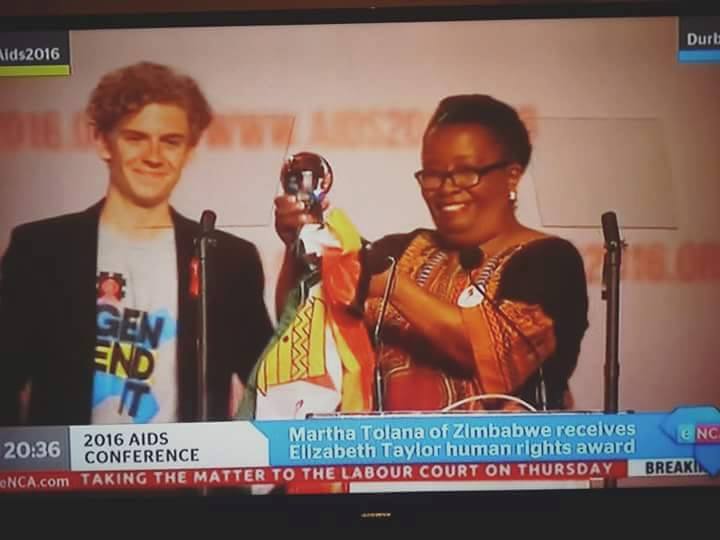
2.Farai, MBA, CPA,CGMA- a qualified Accountant who is based in USA. Currently working as a Finance Manager, He will bring in business leadership and management skills to the board. Farai will be the Deputy Chairperson of the ZBIN board.
3.Laureen– Based in USA, Laureen has a strong background in the medical field and brings a lot of networking expertise to the board.
4.Tavaziva, CA- a qualified Accountant (Chartered Accountants South Africa) Tavaziva brings to the board leadership,financial and risk management expertise to the group. He is based in the United Kingdom where he works as an Internal Audit Manager. He is currently pursuing Chartered Financial Analysts (CFA) studies.
5.Rudo-Rudo is based in the United Kingdom, a former teacher in Zimbabwe and a medical field professional, she brings a lot of networking and capacity building skills to the group.
6.Farai– Farai based in South Africa is from the Engineering field and holds a Bachelor of Engineering (B.Eng.), Civil and Water Engineering (Hons) a Master’s degree, Water Resources Management and a Masters in Business Administration. She brings to the board a lot of engineering,innovation and business management skills.
7.Polite– MBA-Polite brings in a lot of capacity building, enterpreneurship and consulting skills to the board. He is currently based in Plumtree.
8.Victor– ACMA,CGMA, Based in Harare, He brings a lot of experience and skills in Entreprenership, Innovation, Capacity Building, Risk and Financial Management.
9.Rutendo-Rutendo is a lawyer by profession and is currently based in Harare. She brings in entrepreneurship and legal skills.
10.Maggie-Maggie comes from the Marketing and Human Resources Management field, a holder of a Marketing Degree, she is finalising MBA studies with the National University of Science and Technology. Currently employed as a civil servant, Maggie is the secretary of the board.
Board Statistics
| Total members:10 | Maximum term limits:2 terms |
| Gender Analysis: (60% women-40% men) | Location : 60% Diaspora-40 % local |
| Location : 2 USA, 2 UK, 1 SA, 4 Zimbabwe | Professional background: 3 Qualified Accounts, 1 Lawyer, 2 Medical Field, 1 Engineering, 1 Business Consulting, 1 Marketing and 1 NGO Management. |
| Zimbabwe location: Harare 3, Plumtree 1 | Members all Zimbabwean |
Term Limits and Handover
The team has been in existence from the start of the forum in February 2015. Our official term begins in March 2017 and ends in March 2027. Serving a maximum term limit of 2 terms, we have to develop one of the best regional business forum that helps in business and investment in Southern Africa. Starting with a capital of less than $1,000-we hope to leave a balancesheet with 7 digit figures in value when we leave. Hope to have assisted hundreds of thousands of Southern Africa citizens with information, access to markets and capital. We will handover a thriving business forum to the next generation of business leaders who will carry on with founding vision.
We will distribute the constitution of the forum to our members in future. Please note that a bigger council is going to be in place that has a total of 30 members. This will ensure that we cover some of the regions that have not been covered on the board such as Australia, Namibia, Mozambique, Malawi and Cape Town.
Formal membership Registration
The board is not going to be responsible for member registration, we will recruit a secretariat in the next 3 months. The secretariat will be responsible for formal registration and we are looking at recruiting an initial 5,000 members and most members to come from those already on our Facebook and Whatsapp forums.
So in summary, your forum is here for Business and Investment Information, Access to Markets and Capital. Your forum as already demonstrated during the past 2 years, will be anchored on transparency, innovation and intergrity.
Please note that we are not an investment authority, so do not approach us with money for investment.
Wishing you a Blessed Weekend