close
Diaspora Matters

Lake Malawi Opportunities

kupo

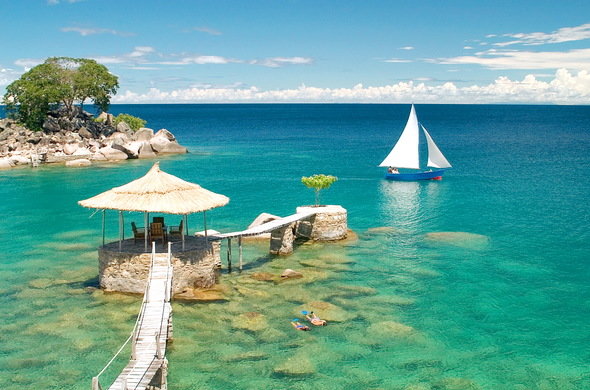
Are you taking advantage of opportunities from Lake Malawi? If not then make a plan and not be left out. Lake Malawi is one of the largest inland lakes in Southern Africa and offers massive tourism potential. The number of tourists coming to Malawi continues to grow each year and one of the favourite destinations is the big and beautiful Lake Malawi. An estimated 805,000 tourists visited Malawi in 2015 according to www.ceicdata.com

Tourists love beautiful and thatched lodges for accommodation, they love water sports and sailing on the lake. Most of the tourists come from Europe, America, Australia and Asia. Some also come from Africa and all with the aim of enjoying the warmth of the Malawian hospitality.

Advantage Entrepreneur
1.Do plan on setting up own travel companies-learn how existing ones are doing it and develop own business plan.

2.Who is providing accommodation? Is there room for more players? Important for you to monitor tourist arrivals and team up with friends to provide accommodation services.

3.Who transports tourists when they come to Malawi? How are they doing? Make own plan to also enter the field and provide taxi cabs or buses to ferry tourists.

4.Who provides food and drinks to tourist hotels and lodges? How can you link up and also benefit?

5.Arts and Crafts: Remember our popular carpet rug making? How many have sold Proudly Malawian carpets to tourists? If you have not, then iam deeply disappointed…tourists bring hard cash and as taught during our trainings, you should be able to make carpets targeting a few locals and more foreigners. Make carpets with Malawian flags, make carpets that tourists are interested in.

6.Boats; Met a friend in South Africa who was buying boat engines, he must have bought 3 or so. Thats being entrepreneurial, you will never go wrong with boats and accessories. Just get a market first and then supply.

Next week we will be  covering Kilombero Rice opportunities.


Loading

read more
Diaspora Matters

Weekly Update: Sharing Economy and Opportunities for Zimbabweans

tsonga

The sharing economy is an economic model often defined as a peer-to-peer (P2P) based activity of acquiring, providing or sharing access to goods and services that are facilitated by a community based on-line platform.

Breaking Down ‘Sharing Economy’

Communities of people have shared the use of assets for thousands of years, but the advent of the Internet – and its use of big data – has made it easier for asset owners and those seeking to use those assets to find each other. This sort of dynamic can also be referred to as the shareconomy, collaborative consumption, collaborative economy, or peer economy.

Sharing economies allow individuals and groups to make money from underused assets. In this way, physical assets are shared as services. Take for instance car sharing services like Lyft and Uber. According to data provided by the Brookings Institute, private vehicles go unused for 95% of their lifetime. The same report detailed Airbnb’s cost advantage over the hotel space as homeowners make use of spare bedrooms. Airbnb rates were reported to be between 30-60% cheaper than hotel rates around the world.

The Sharing Economy is Evolving

The sharing economy has evolved over the past few years where it now serves as an all-encompassing term that refers to a host of on-line economic transactions that may even include business to business (B2B) interactions. Other platforms that have joined the sharing economy include:

  • Co-working Platforms – Companies that provide shared open work spaces for freelancers, entrepreneurs, and work-from-home employees in major metropolitan areas.
  • Peer-to-Peer Lending Platforms – Companies that allow for individuals to lend money to other individuals at rates cheaper than those offered through traditional credit lending entities.
  • Fashion Platforms – Sites that allow for individuals to sell or rent their clothes.
  • Freelancing Platforms – Sites that offer to match freelance workers across a wide spectrum ranging from traditional freelance work to services traditionally reserved to handymen.

Spurred primarily with the growth of Uber and Airbnb, it is expected that the sharing economy will grow from $14 billion in 2014 to a forecasted $335 billion by 2025.

Where does Zimbabwe stand when it comes to Sharing Economy?

We are still some years or probably a decade behind before we embrace this new economy. This new economy is likely to be adopted by young people or returning diasporans. The economy needs to improve first and help to expand the market. The adoption of new technology has generally taken time unless there are get rich quick opportunities like discredited MMM. ZBIN will be exploring the sharing economy avenue in 2018, we do not expect to make a huge impact but to make some small footprint that will be the bedrock of successful launches in future by enterprising entrepreneurs. This is why we are  encouraging lose networking within the community and already our Whatsapp platform with more than 8,000 networked members is a good model which will slowly evolve towards shared economy.

Volunteers

We are going to be holding induction meetings this week for some of our volunteers. They come from diverse backgrounds such as  law, finance, business management and ICT. We encourage members to sign up and help the SME sector. In the process you build your profile which will help you in future.  The SME sector is the biggest business sector in Zimbabwe and employs the largest number of people. The ZBIN community is  strategically  placed to tap into opportunities that exist in the sector and we do this through effective use of digital platforms. One interesting insight is that there are no big name brands for the service sectors such as Company Registrations, Finance, Marketing, Human Resources, ICT, Legal and Tax. There are many scattered consultants but no one can be termed a well known Marketing Guru who specialises with the SME sector. Noone can claim to be the leading brand when it comes to developing ICT needs of the SME sector. Therefore golden chance presented to you to do work on a part-time basis and build you brand. This applies to all members-local and diaspora.

Yearly Membership Registration

Do not forget to renew your membership registration which has been pegged at $10 inorder to be affordable. Members have first preference when it comes opportunities on the forum. They benefit from special market surveys, get training and conference discounts. They join any of the ZBIN groups and are guaranteed of full year tenure on the groups. The biggest advantage has to be the ZBIN 2018 Investment Opportunities book worth more than $50 but coming at more than 50% discount to registered members. Get in touch with our Adminstration Assistant, Felicity Chipato on our landline +2634339454 for more registration details.

What are Western Ambassadors saying?

Keep following what Western Ambassadors are saying about Zimbabwe especially the investment climate. To date we can say so far so good especially if we follow what the EU ambassador has said about engaging the government of Zimbabwe and restoring economic ties. The British Ambassador appeared in the Standard today and the song is that of re-engagement for the better of Zimbabweans. The world wants a prosperous Zimbabwe but we have to prove the first test and that is walking the talk in terms of ease of doing business reforms and also conducting free and credible elections later during the year.

Loading

read more
1 40 41 42 43 44 91
Page 42 of 91