





close

Diaspora Matters

Diaspora Matters

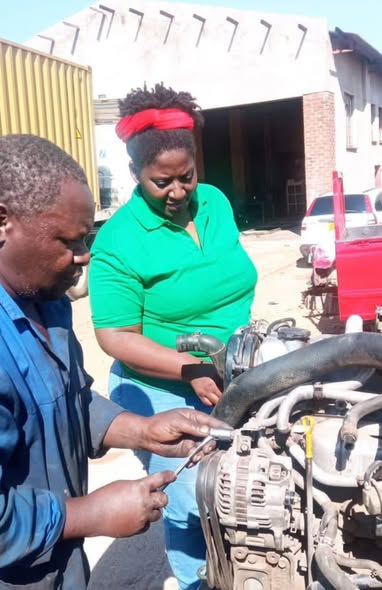
Entrepreneurship Tips for Ex-NGO Workers

txx

The end of employment for some was abrupt. No more grants coming—contracts to be terminated in 3-6 months and you have to go home.

Easy to adjust? Not really as some had to be hospitalized due to Blood Pressure complications after being thrown into the fire. Some had become accustomed to regular salaries for years. Taking loans, sending children to private schools—some to foreign universities.

Then all of a sudden from a salary of $5,000 to none. From $1000 to none, and its final.

To make matters worse—most of the skilled manpower,  unable to be shift to the private sector or public sector. So a few left the country to start new lives—but the majority remained—jobless and forced into entrepreneurship.

Some had exit packages but they were not enough with most consumed by paying off loans and trying to adjust to the new life and trying out entrepreneurship.

So what sort of advice can we give to them?

  1. Study the entrepreneurship mix: In Zimbabwe relying on one venture is suicidal. Study how one balances short term investments, medium term and long term investments. And this is a new skill and for reference do read our 2022 Business Opportunities for Zimbabweans Book. You could need a consultant for assistance. Miss this topic and you will refer to it with regret.
  2. Study the Learning or Experience Curve: The gap between  NGO work vs Entrepreneurship is huge. You are learning from the bottom. You are learning from the bottom how to generate a dollar and it may not be easy. Yes a dollar is hard to generate as there is stiff competition and you need time.
  3. Avoid the urgency to maintain previous lifestyle. The urgency will lead to ponzi schemes like sponsoring gomba in gold mining, or anything promising fast returns.
  4. Lifestyle adjustment: Very painful but consider areas out of big cities. Big cities like Harare are very expensive for unemployed people. Instead consider relocation to small towns—but maintain Harare contacts for markets access. Bindura, Marondera, Mvurwi, Chegutu, Mrew and Chivu could give you a better life for restarting and slowly rise. Low cost of living and even doing business and then transport products to Harare.
  5. Farming highly recommended: First farming helps you with food security—next it helps you find out what suits you. Avoid expecting high returns from the first season. It rarely works that way—and if you succeed from the first harvest—count yourself lucky—but its not guaranteed that follow  on seasons will be the same.
  6. Costs of Learning: Avoid delegating work to others till you learn hands on how the business runs. You were a Country Director for a big NGO but if you are to go into farming—Be ready to stay on the farm and get your hands dirty.

Join entrepreneurship forums—do a lot of reading and researches. From our books you also get to learn of experiences from others—the good and the bad. ZBIN provides you with key contacts—and a platform to develop and avoid some of the common mistakes.

Of course there is more to share—but we encourage you to avoid partnerships. You are still new to business, and partnerships  rarely work for newbies.

Wishing you the best—as with time you will find a working formula.

Loading

read more
Diaspora Matters

Jangano Crowdfund buys land in Chivu Town

jjngo-7

It is extremely complex to get Zimbabweans to work together. We generally prefer riding solo and where we agree to work hand in glove, it is usually for a brief period before squabbles kick in especially power struggles. So we have every good reason to celebrate the Jangano Crowd Fund for showing the light to many small business owners.

And our business model was very simple:

1)Drafting a simple constitution to safeguard investment-it took us 4 months of serious brainstorming,

2)Bank Funds with FBC Amarounds Account: Avoid handing cash

3)Secure land from reputable institutions. No purchases from individuals. Target new developments from small towns. In our case (Rawson Properties)

4)Transfer funds electronically and conclude the deal

Lessons Learnt.

-It is doable although you need tons of patience as decision making is collective.

-Some could reach the final line but decide to leave. So budget for withdrawals.

-Keep subscriptions low and avoid big figures or big land out of reach.

-The game is move slowly, acquire small land-develop and keep moving.

In April 2026 we are expecting our next Crowdfund called Thuthuvaka to also buy land after running for 9 months. Interested in land acquisition? We have a new one coming from mid January 2026.

*Meanwhile we urge you to subscribe as a member to keep this page running in 2026

Loading

read more
Diaspora Matters

Why you should join ZBIN

suscrptn

You will need to network with others for inspiration, mentorship and information sharing. Running solo will complicate your learning curve. So we urge you to search extensively for business forums in Zimbabwe—unfortunately there are very few effective ones. And ZBIN stands amongst the few as the biggest.

  • We have been around the block for 10 years, you can verify on group settings.
  • We have worked hard consistently over the past decade to reach 150,000 Active Members.
  • Active Membership allows your brand to grow within an expanding network.
  • Business Ideas, Business Mentorship—Any question you ask has ready experts to assit.
  • The Active Membership has a good buyer culture.
  • We have various active crowdfunding projects such as the land purchase projects of Jangano and Thuthuvaka with a total membership of 150.
  • We have 6 free books which compile opportunities from 2018-2024.
  • We produce weekly newsletters with a wide circulation and another opportunity to boost your brands.
  • Every new member gets a forum profile across all platforms.
  • Membership Access to 30 Whatsapp Groups (Subscribed, Agriculture, Poultry, Rabbitry, Cruise ships, Lima Beans, Mining, Mompreneurs, Youths, Financial Literacy, Byo, Harare, RSA, Cape Town, Hatfield, Midlands etc)
  • Premium Chats Showcase and Trainings—Every Friday at 7:00pm. Your opportunity to present and be known—and also learn from others.
  • Diasporas: Your opportunity to learn whats really going on back home—networking and getting crucial contacts. Don’t start networking when you return home—plant seeds early.

How much is registration? It has been pegged very low to cater for all classes. Its $10 per year and do link up on 0773055063 (Whatsapp)

Loading

read more
Diaspora Matters

Running a Downtown Tuckshop in Harare

takada

One of the best entrepreneurial shows in Zimbabwe is our Premium Chat Show which we host every Friday evening. We invite our members to share their experiences, and sometimes we even reach out to experts for presentations. Premium Chat shows are part of subscription benefits which is $10 per year.

We share below a premium chat done in 2023-therefore a bit outdated, but the content still valuable for your decision making. The premium chat was hosted by our member Tinashe Chingoma.

Today we are going to dwell much on tuckshops.

Recently the CEO of OK Zimbabwe arguably the biggest retailer in the FMCG market complained that they are likely to get out of business due to the influx of tuckshops. When we talk about tuckshops we merely refer to small convenient shops which has sprouted around all towns and cities.

Way back especially 90s they served as convenient shops but of late they have be one the hub of retail and family needs have been able to be met at the same level as OK,TM etc

The major thrust today will be

1-financing

2-marketing

3-product pricing

4-procurement

5-business tactic/season approach

5-growth/survival phases

6-wealth creation

Financing

This is one of the crucial parts in this business. Hakuna Mari Shoma and I repeat hakuna Mari Shoma kuti utange yako tuckshop.

The major thrust is what your customers want. Identify customer needs

  • Those needs will determine what you have to put in your shop
  • Let’s say hauna Mari une kana $1000 only kana $500
  • Look at you location
  • Consider what you want on a daily basis
  • I am referring to basic needs like bread, milk, rice, mealie meal ,eggs etc
  • Those are the things you stock first

If you stay in a high density suburb you have to incorporate maputi,mazepe,sweets etc.The good thing about those products is you are able to put mark ups of a minimum of 10%

If you stay in Harare you are blessed, generally Harare inodhura

Chitungwiza has tough competition. So if you have like $500 unotanga

Target to sell $100 per day

Every cent every revenue ngaidzokere inohodha

You get something like $10-$15 profit per day

Meaning kuti you have a chance of creating excess of $400 profit per month kana watanga nestock ye$500

Please when your capital is so low concentrate on fast moving products

Put all your effort on those products which fly off the shelf

Don’t over stock things like rice,sugar,cooking oil etc

Zvobata Mari apa mamark up azvo are as low as 5%

Right let’s look at those whose have like anything beyond $2-3000

Walk around your area and do a smart survey

Ona kuti vamwe vanei?

Ona zvaunotengawo on a daily basis.

Ona zvaunotsvaga uchishaya.

Put all that together because we will be going to our second part which is the crucial one.

Procurement

Always strive to procure from the manufacturer

Of the manufacturer insists on accounts opening find out the requirements

Kana usingagoni wega Batana nevamwe

Usually indians put minimum orders per item

Please zvegodo chimbosiyai,batanidzai

5% difference in prices iyoyo yakakosha

Manufactures we are talking about

  • Delta
  • Varun
  • Trade kings
  • Mega market
  • Surface
  • Pure oils etc

You also need agents like

  • Gain
  • Evolutions etc

These companies will be relatively cheaper than wholesalers

If you have access to rtgs at good rates it’s also Ana advantage

Let me give you an example

TM is selling cooking oil at $19900 today…pure drop

A box of pure drop is going for $23.50 in the market,surface is selling at $23 but minimum truck re700 boxes

So if you get let’s say rate re7300 your box maTM rinenge raita $21.80

Wotengesa hako mafuta Ako ne$3

Those basic maths ndodzinoyambutsa manje

Foreign procurement

Major sources dzezvinhu zviri muzim

  • South Africa
  • Zambia
  • Mozambique
  • Malawi
  • South africa-bulk of the products in Zim comes from SA.Even sugar is now being imported from SA.

Zambia-few but high return products

  • Milkit
  • Sweets
  • Kombucha
  • Joe biscuits
  • Shake n sip
  • Wildcat etc

 Malawi

  • Pads
  • Mosquito coil
  • Mosquito repelant
  • Doom
  • Shoe polish
  • Hair products like dark n lovely

Mozambique

Almost similar to product from Malawi but they have rice and rice product as extra

*Modes of procurement*

Direct procurement

You decide to buy directly from SA etc

requires hands on

If you are still small you would need to travel to say go to shops like cutlrice ,SA shop etc

So Tuckshops rite those in downtown wats their capital outlay out of interest

You wrap your goods give them to malaicha and come to zim

To survive in downtown you require a minimum of 60k

Option 2 in direct procurement is you rely on marunner

Mambuya anoenda vohodha iwe wohodha kw ari

You can choose to specialise then you would require less capital

T Gomendo: These ones who independently supply tuckshop

If you have access to good rates then you swipe on wholesale markets like Gain,Metro etc

Of late there is a ZIMRA list which clearly define goods allowable for duty waiver

Tuckshops market themselves through pricing and availability of goods

Your pricing should be competitive

Some tuckshops are resorting to specialisation

Eg we are in a very hot season you can choose to specialise on liquids

Drinks

Yogurts etc

Revive

Pepsi products are a hit

You open an account with Varun ,Dairyboad and Probrands

You get on average 3-5% discount

You turn that discount into your mark up and do wholesale

Let’s say you are able to make $2000 sales per day *30

That’s 60k sales

That’s translate to approximately $3000 gross profit

I know of a guy near bakers inn who pushes 5-10k cases of cascade 1litre per week

He puts 30 cents margin

Those guys in downtown put 50cents to a $1 mark up per box

You have to have in mind that all businesses go through dry seasons

When you face your own dry season you ought to have the survival tactic

Major point will be cost cutting measures

Lifestyle management

Salary reductions

Mass sale approach/bulk approach

Procurement redirections

All those who are outside Harare you have a chance to grow bigger as you are able to put up higher margins.

Loading

read more
Diaspora Matters

Premium Chat: Louisa Matongo

mko

People often ask, ‘So, how’s business in SA?’ The truth is, I’ve never run a business in Zimbabwe. Everything I speak about comes from what I’ve learned — and lived — right here in South Africa.

Thank you so much, Ntata Victor, for giving me this opportunity to share our story. I appreciate it.

My name is Louisa, and I’m opening up about our business journey in South Africa.

Let me take you back to 2016. From 2017 to 2018, life stood still. Nothing I touched seemed to move forward.

In late 2018, I tried again. I volunteered at the University of Zimbabwe, hoping to bring a food innovation project to life. But it didn’t take off the way I imagined. Tired and disheartened, I gave up on that dream too.

That year, I made a bold move — I quit my job as a Food Technologist at Dairibord and took up a position as a security guard in Dubai. Six months later, I was fired. I returned home with nothing but disappointment… and about $300 to my name.

Then something unexpected happened.

Two years later, he paid lobola. Our families celebrated. So did we.

Four years later, I became Company Director of Seasonings and Condiments. Five years later, we bought our first property — and this time, both our names are on the title deed.

My then-boyfriend — now husband — saw potential in me that I had forgotten. He believed my background in food production and R&D could help his struggling business in South Africa. He had his weaknesses, and so did I. But we had nothing to lose. So I packed up my life and moved to South Africa to give it one last try.

We began building together — working in a tough environment, under his leadership. I wasn’t a director, I wasn’t his wife. I was just a woman trying to make it.

Most days were hard. Money was tight. I was undernourished, as you’ll see in the photo. Some days, even good food was a luxury I couldn’t afford.

Then COVID-19 happened. Strangely enough, it saved me. At the time, our electricity had been cut off — we hadn’t paid rent in 8 months. I remember crawling into my 4th-floor room through a neighbour’s window because the landlord had locked my door for late payment. But still… we kept pushing.

Let’s talk about collaboration — the kind that goes beyond just buying and selling.

In our business, we buy from suppliers… and we also sell to those same suppliers. Especially when it comes to paprika and chillies — my husband, Tich, has mastered the art of aggregate supply of chillies and paprika. He is so damn good! It’s become one of our strongest areas, and today, we’re proud to be among the best in that space.

We mill spices, herbs, animal feeds, and grains.

What started with one small machine from Malawi has now grown into a setup with eight machines — built from pure grit and vision. And we’re not done yet. Once certification is in place, we’re stepping fully into industrial milling.

Working as a couple

Working as a couple is one of the most rewarding yet challenging things you can do.

When both people share the same hunger, passion, and vision, the results can be incredible. But it’s not always easy — disagreements in business often spill over into the home, and if not managed carefully, they can affect your relationship, your children, and even your team. Over the years, I’ve learned that during heated moments, silence is my strength. I pause. I breathe. Because raising voices helps no one. When the dust settles, we come back to the table and talk things through — calmly and respectfully. We have two young children and also have employees and customers watching us. And we’ve come too far to let a disagreement steal our peace.

On ZBIN and Finding My Own Lane

I noticed something on ZIBIN: two or three people were already marketing their spices there. I could’ve tried to be the fourth — but honestly, I knew I’d be fighting for a market I probably wouldn’t win. So I paused. I stepped back. And that’s when I saw the gap.

Milling services. Chigayo chedu.

No one had claimed that space yet. So I ran with the vision.

As far as I know, I’m the first person on ZBIN to focus on milling — and that is slowly becoming my lane, my identity, my story. I don’t post about herbs. I don’t push spices. I’m not shouting about Malawi rice or Chalimbana peanuts. I’ve chosen my niche, and I’m building from there.

The lesson?

Let others grow. Let them dominate their lanes. Let the industry expand. Why fight over one pie when we can grow a bakery?

Those with big marketing budgets can go ahead — and they should. Because as they grow, they raise awareness for all of us.Some customers will prefer partnering with the big names… but others will choose us because of how we do things at Seasonings and Condiments.

There’s enough room for all of us. So don’t be afraid to step back and find your unique angle. The market is big — but your vision has to be clear.

Louisa Matongo can be contacted on +27 63 431 6872.

Emai: louisa@seasongings-sa.co.za

Louisa a member of the ZBIN Subscribed Group, Mompreneurs and ZBIN SA Group.

Loading

read more
Diaspora Matters

Why Every Company Should Employ An Economist

rudo

In my view every company should have an economist in the boardroom. Someone who is able to assist in decision making looking at past economic trends and projecting the future. But is this possible? Budget constraints do come into play and few are able to engage a full time economist.

Only financial institutions have the luxury of employing them and for good reasons, most engage actuarial scientists. Do we find economists in the retail sector, mining sector, agriculture sectors?

Highly unlikely and in a few instances—they engage management firms on a consultancy basis especially during strategic planning and review sessions.

Therefore the role of economists is assumed by accountants. But do accountants have the depth required in a fast changing economic landscape?

How many accountants can unpack the De-dollarization Roadmap? How many can confidently say this is what is likely to happen creating a scenario analysis for decision making?

How many accountants are able to unpack the history of currencies in Zimbabwe and implications on business performance? For instance to say The Bond lasted for so many months—these were the implications, lessons learnt carried over to the ZIG and the likely scenario is this or that?

Truth is, accountants have a lot on their plate. Financial reporting, audits and compliance do take a lot of time leaving little space for analysis. Yes top companies do factor this and have well developed systems. But how about non listed firms, medium sized businesses and small ones?

How many accountants can predict the next Statutory Instrument and likely impact?

Who can confidently advise on economic impact during the run up to elections? Who has time to be following all draft bills tabled in parliament? Who has the luxury of economic indicators trekking, reading the mood and advise management?

What will management say when they see a senior employee sitting in office and browsing through newspapers and listening to business conversations? They will say—this position doesn’t add value!

Do accountants possess enough depth on economic matters?

· At college (Bacc|Bcom)—Economics briefly covered, micro and macro economics.

· At MBA—Economics also covered but still the depth not good enough.

· At Professional Level—Basically a repeat of Honours Degree level. It is worse for foreign qualifications which do not consider the local complexities. Yes they will master micro-economics basis, macro economics too. But will have scant application skills on local economies.

It is only experience that they will add depth to their skills. Solid Continuous Professional Development (CPDs) will help plug the gaps.

As you review your performance results particularly adverse variences, one of the questions you may need to ask yourselves is—What percentage could be attributed to lack of economics depth?

Loading

read more
Diaspora Matters

Comparing 2005 vs 2025 Opportunities

abantu

Were you fortunate to have been around in 2005? Ok lets rewind the clock and look at the changes that have taken place over the last 2 decades.

In the year 2005 what was the situation?

  1. No Social Media.
  2. No official US Dollars circulation.
  3. No Chinese buses on our highways.
  4. Few ex jap vehicle imports.
  5. No Runners existed.
  6. There were no buses to Beira, Capetown and East London.
  7. Borehole drilling and Solar Products out of reach:
  8. Mukuru did not exist:
  9. A lot of local banks had been closed.
  10. We did not know much about diamonds, Chrome and Lithium
  11. NGOs employed thousands of employees.
  12. No crypto currencies existed.
  13. Smart phones did not exist.
  14. Few Zimbabweans sought medical assistance in India.
  15. There were technically no Zimbabweans learning at Zambian Universities.

What is the situation now? What were the drivers of change?

The Smart Phone ushered in a lot of new opportunities. Social Media is a big chapter which disrupted every facet of life bringing in new opportunities and also risks.

Massive Demographic Changes took place with millions migrating abroad—also bringing tons of opportunities with the strong emergence of money transfer agencies such as Mukuru—new bus routes also created.

Strong China Emergence a global leader disrupting supply chains and global economies. China’s competition drove prices down in energy products, and machinery.

Minerals & Tech: Most Zimbabweans were unaware of the existence of Marange Diamonds. We  not even care about the location of chrome deposits. And this also applies to gold where a lot of new discoveries were in the pipeline.

Climate Change: A series of droughts drove innovations in Agriculture and this also includes borehole drilling, solar irrigation systems etc

Tech| Demographics| China | Minerals | Economy | Climate Change

Loading

read more
Diaspora Matters

The Best Period To Plant Madagascar Lima Beans is Now

j2

It started with an accidental encounter of 3 wild bean plants in my backyard garden in late November 2023. They were vigorously growing and I reached out to forum agronomists for help—are the beans edible? I asked because they pods had thorns and definitely looked wild.

Emmanuel Dube was the first to respond and said the beans were edible. Tsitsi Mubvakure was the second to confirm edibility and said she had a few of them growing at her backyard in Harare.

An interesting journey followed with seed multiplication and sharing within the forum. The seeds are not available for sale from leading seed houses. So if you want to grow them—you have to start from the bottom—a few plants and multiply them till you have enough for meaningful farming.

Our big space farming trials started in January 2025 and there are a lot of lessons;

  • Constant watering is crucial and often a challenge.
  • Planting early helps develop strong plants—the ideal period is September to December.
  • The December period when rains come—is for upscale.
  • Avoid having the bean plants growing and expanding on the ground—provide enough trellis.
  • Security fence extremely important as the beans are a delicacy for cattle.

How many plants do you need to produce a tonne?

A thousand seeds giving you an average yield of a kg every 3 months is all you need.

However you need to first go through a learning curve of backyard farming and transferring skills to big spaces like plots, farms and rural lands.

  • Do a soil test first and get experts advice.
  • Do not go for too big farming spaces—rather keep it small and slowly upscale. Too big spaces will give you trellis support challenges. As previously mentioned—Trellis support is hard work and it’s not possible to cover an acre in the first cycle. Keep it most 200 sqm or less.
  • Evidence has shown that well watered and manure supported plants can give you 5kgs of beans in 3 months. So it’s about more of quality than quantity.

So let’s give it a try this September and aim to have at least 10 plants and lets grow together. Search around for seeds and you could be fortunate. On ZBIN we distributed many free seeds but this time—if you need some, you have to pay a token fee to support the forum operational costs. You can link up on +263 773 055 063.

Loading

read more
Diaspora Matters

Mistakes ZBIN Did: Not Registering SACCOs for Crowd funding Projects.

save

I had an interesting discussion with Zbinite Wilson Wizalamu who is the founder of Centi Centi SACCO which has members in Zimbabwe and South Africa. He is also a board member of The National Association of SACCOs.

The history of Savings and Credit Associations in Zimbabwe was tainted by Housing Cooperatives where many lost funds. So mention Cooperatives—and many will shy away, it is synonymous with fraud and mismanagement.

However there are quite a few which are doing well with the Teachers SACCO having 18,000 members and in 2017 they had a balance sheet valued at US$18 million before currency conversion in 2019.

The Biggest Risk ZBIN Crowd funding Projects Faced.

Capture, Capture and Capture of Projects. Registered as companies or simply roundtables.

Solution=SACCOs

And here is how;

  1. A SACCO needs a minimum of 10 members for registration purposes.
  2. The 10 members will form a (1) management committee, a (2) supervisory committee, a (3) loans committee, and a (4) education committee.
  3. The treasurer has to submit a CV for review and reference purposes.
  4. In addition, the SACCO has to be part of a National Association of SACCOs.
  5. They will be regulated by SACCOs Statutes.
  6. Upon registration—they receive a certificate.

With the above steps—it is almost impossible for a single person to override the systems and everyone and convert a Crowd funding Initiative into a personal property. The corporate governance structure is regulated with statutory reporting and compliance.

A registered company can easily be converted into a personal project. One can use political power to systematically remove every shareholder taking advantage of commercial law illiteracy. Start-up companies vulnerable to takeovers by greedy members.

SACCOs government oversight makes it easier to lodge complaints for review.

Unregistered round tables easy for take overs or the founders disappearing from the scene.

So the message from now is SACCOS, SACCOS, SACCOS and SACCOS.

Kenyan  SACCOS

In Kenya SACCOS hold a combined US$14 Billion in assets or 10%of the GDP.

The benchmark for Zimbabwe should therefore be US$4,5 Billion

A benchmark of 1% means at least $450m but we doubt whether  total assets are worth $20 million.

But as the biggest small business forum in Zimbabwe with 180,000 Active Members, ZBIN has an opportunity to tap into the US$4.5 Billion market provided we have well run SACCOs.

The Jangano and Thuthuvaka Crowdfunding Projects currently hold less than US$20k in funds but have huge potential through laying a solid foundation. Convert into SACCOs in future and the sky is the limit.

Formalize Your Crowdfunding Initiatives

In order to grow and tap into the potential US$4.5 Billion market—ensure you formalize your entities. Yes you don’t have to open up to the public, but lay solid foundations for future upscale and growth.

And if not subscribed to ZBIN—you have an opportunity to be a member of the forum and not be left out.

Loading

read more
1 2 3 4 5 89
Page 3 of 89